Money that
understands you.
Botim AI-Native Wallet & Cards: re-imagining a super-app money tab around intent, not menus.

AI turns what you say into money that moves.
Botim already moves money for millions of UAE expats, but its Money tab is a grid of menus. This concept replaces taps with intent: a prompt bar that understands text and voice, predictive cards that appear on payday, and generated confirmation sheets that show exactly what will happen before anything is sent.
Problem & solution.
User pain points today, and the AI-driven Money tab that answers them.
Sending money home on payday means opening two or three apps to compare rates, then tapping through five or more screens. Users struggle to understand fees, what their family will actually receive, and which card or currency to use abroad. Card controls are buried three levels deep, and splitting a bill still happens in a notes app.
An AI-native Money tab. A persistent prompt bar takes text or voice and answers with a generated, editable card: amount, rate, fee, total, recipient. Predictive cards appear when they matter. The assistant prepares; the person always confirms with Face ID.
Four people, one money tab.
Each persona sends money along a different corridor and has a different reason to stop navigating and start asking.
Suresh, 34
Send home on payday without comparing apps.
Tired after shifts; 5+ screens per transferMaricel, 31
Send by voice on short breaks.
One day off a week; fears the wrong accountAyesha, 29
Right currency on the card when she lands.
Controls buried; forgotten subscriptionsKarim, 26
Split a receipt by item in the group chat.
Chasing friends; typing line itemsPersonas are research-based proto-personas, not interviewed users.
Trust first, every time.
Five rules that every generated screen has to follow.
Intent over navigation.
Say it or type it. The UI is generated around the request.
Show the money.
Amount, rate, fee, total and “they get” on every confirm.
Human in the loop.
The AI watches, prepares and suggests. It never sends on its own.
Ask, don’t guess.
When intent is unclear, ask one question: “Which sister?”
Credit is never the default.
Pay later shows total cost and date, and is never pre-selected.
One north star, firm guardrails.
Targets, not results. The north star is monthly completed money intents per active user: a money action (send, convert, issue a card, pay a split) that starts from a prompt, voice or predictive card and ends in a confirmed transaction.
Four ideas. One connected system.
Each idea stands on its own, and together they make the Money tab feel like it already knows what you came to do.
Ambient Money Workspace
The Money tab reads the moment (payday, travel, month-end) and leads with what matters.
Conversational cards
“Issue a virtual card for Netflix with a 50 AED monthly cap” becomes a live preview.
Predictive remittance
Rate watch, alert and one-tap send, with the rate held for 10 minutes.
Pay inside the chat
Snap a receipt, split it by item, and requests land in the group thread.
Typeface, colour, system.
One system that runs in both reading directions from day one.
- Botim blue
#0052FF - Signal
#6FD3FF - Ink
#07080C - Canvas
#F8FAFC - Success
#10B981
- Title 1
24 / 600 - Body: Send money in seconds
16 / 500 - Caption: Card ending 4417
12 / 500 - محفظتك الرقمية
Cairo 24 / 600
Built to scale
- 1,000+ variables
- 25 text styles
- 56 components · 110+ variants
- LTR + RTL
Simply command and it’s done.
₱500 is read as what Joy receives, and the screen says so. Ambiguity is resolved in words, not hidden in maths.
Maricel holds the mic on the prompt bar.
Live transcript: “Send 500 pesos to my sister…”
Joy Santos · BDO, Ana Santos · GCash, or someone else.
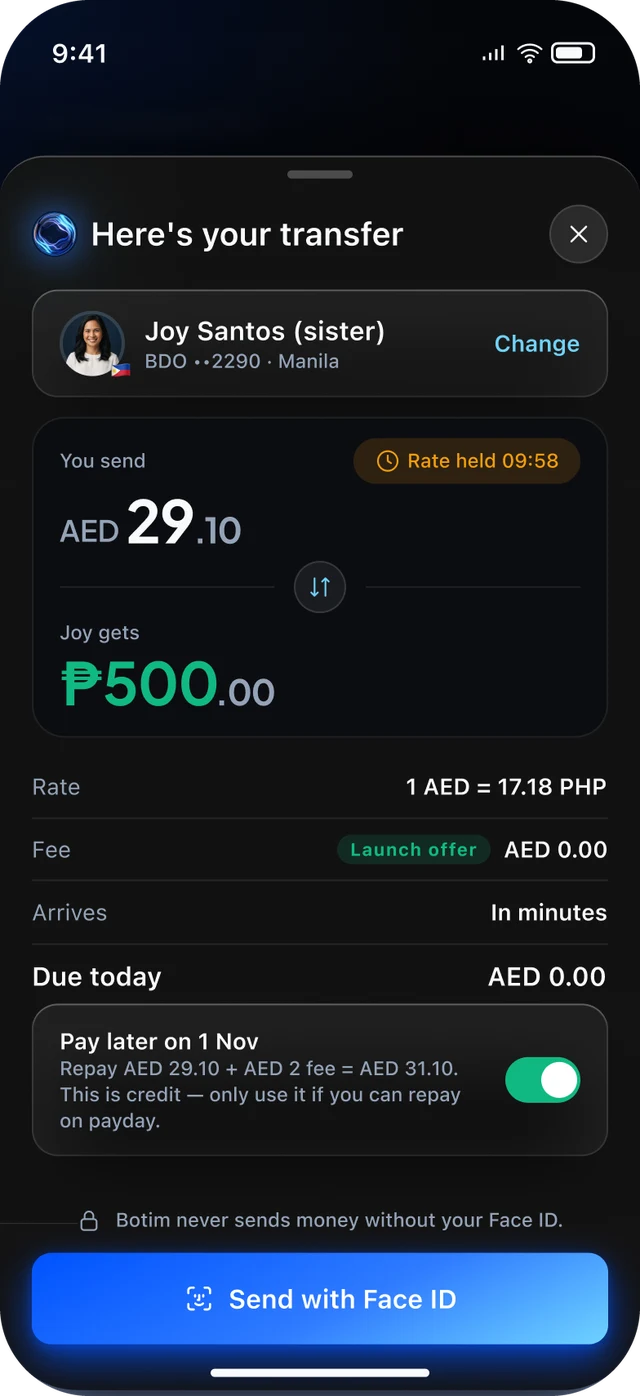
Taps Joy. Rate 1 AED = 17.18 PHP, fee AED 0.00, total AED 29.10.
Low balance, so she turns on Pay later. Total and date are shown first.
Botim never sends without Face ID.
Tracker and receipt, paid out to BDO ••2290 in minutes.
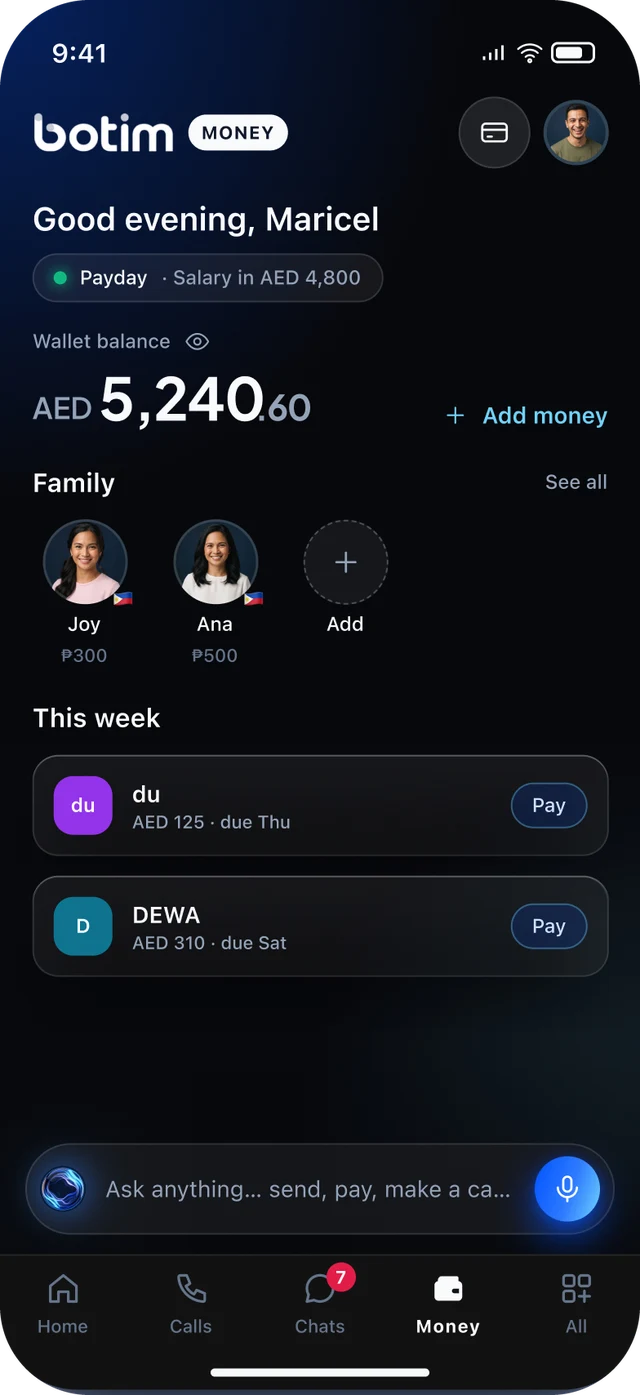
1 · Holds the mic
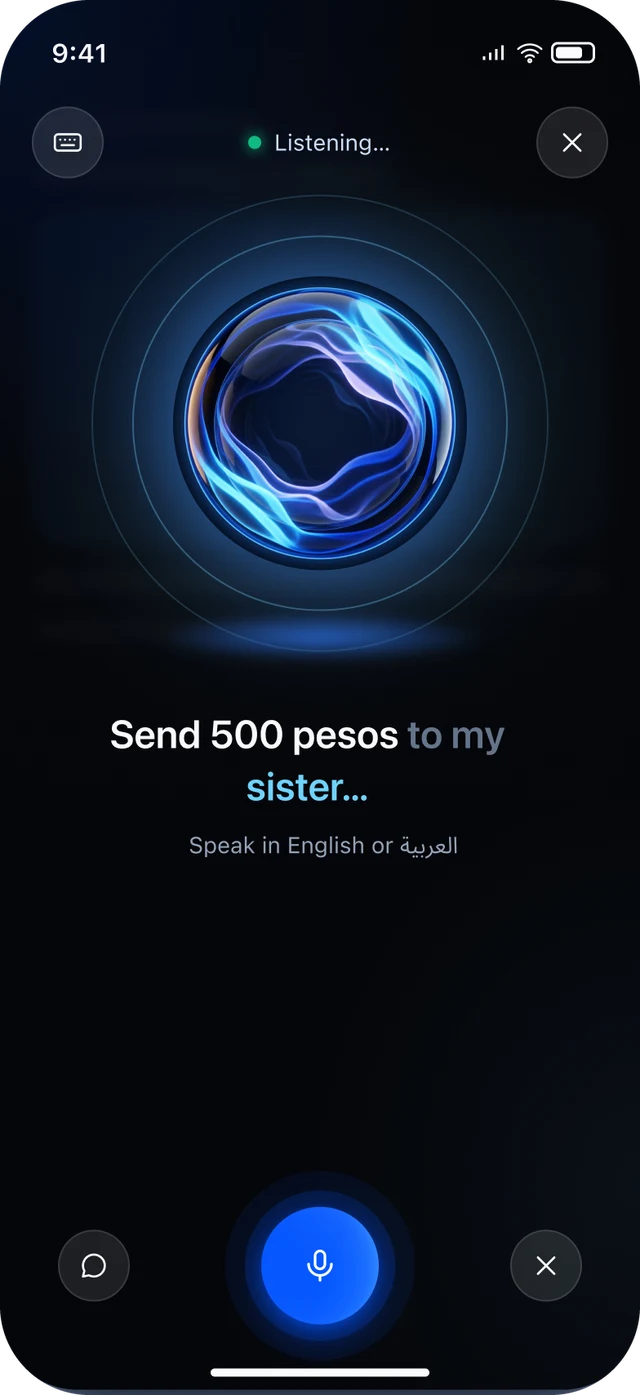
2 · Live transcript
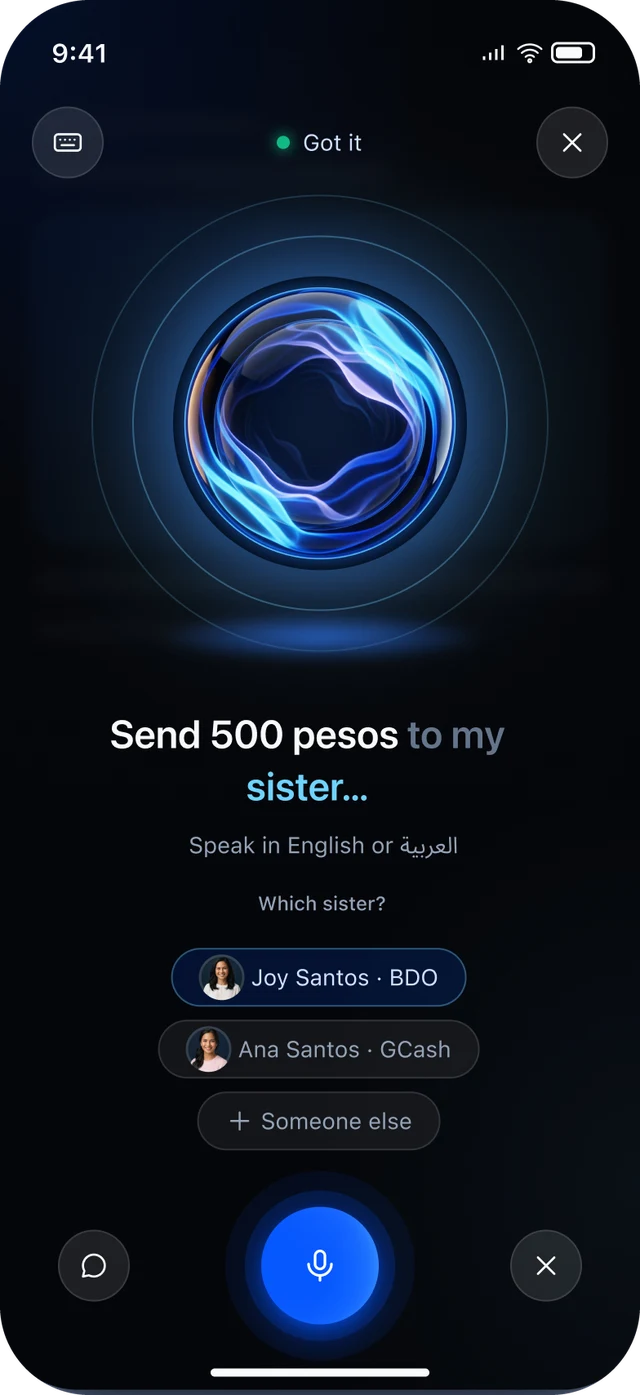
3 · One question
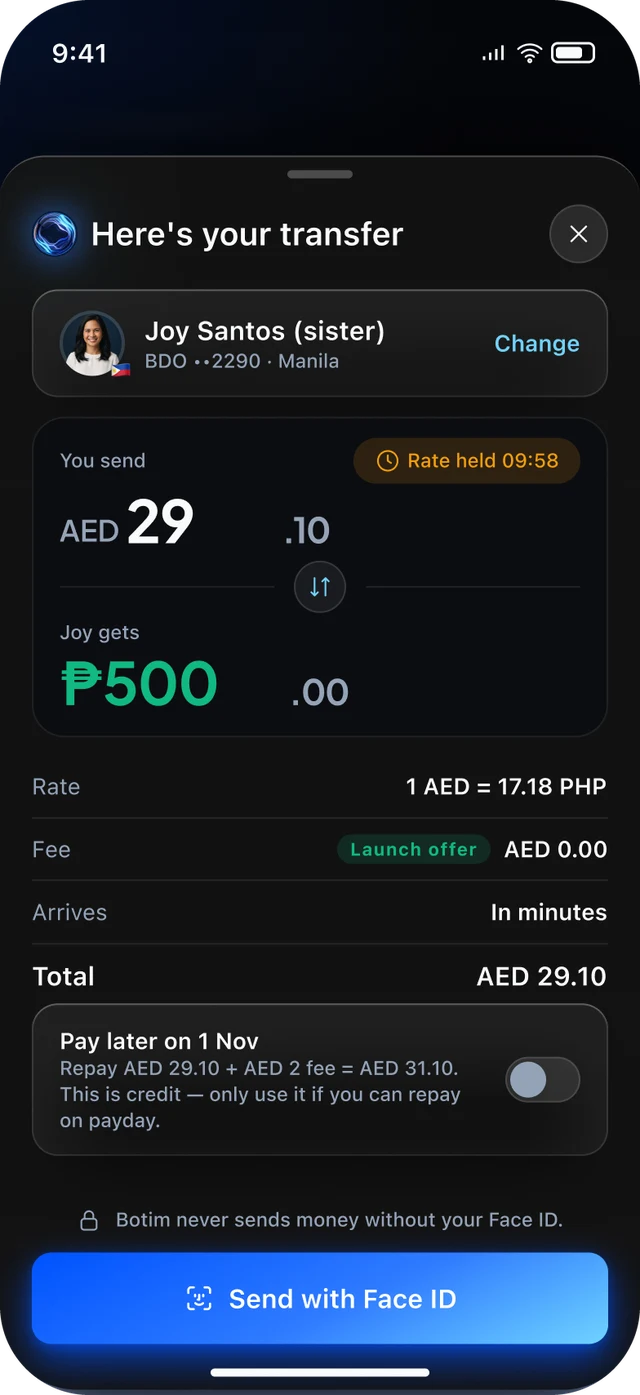
4 · Review in pesos
5 · Pay later on
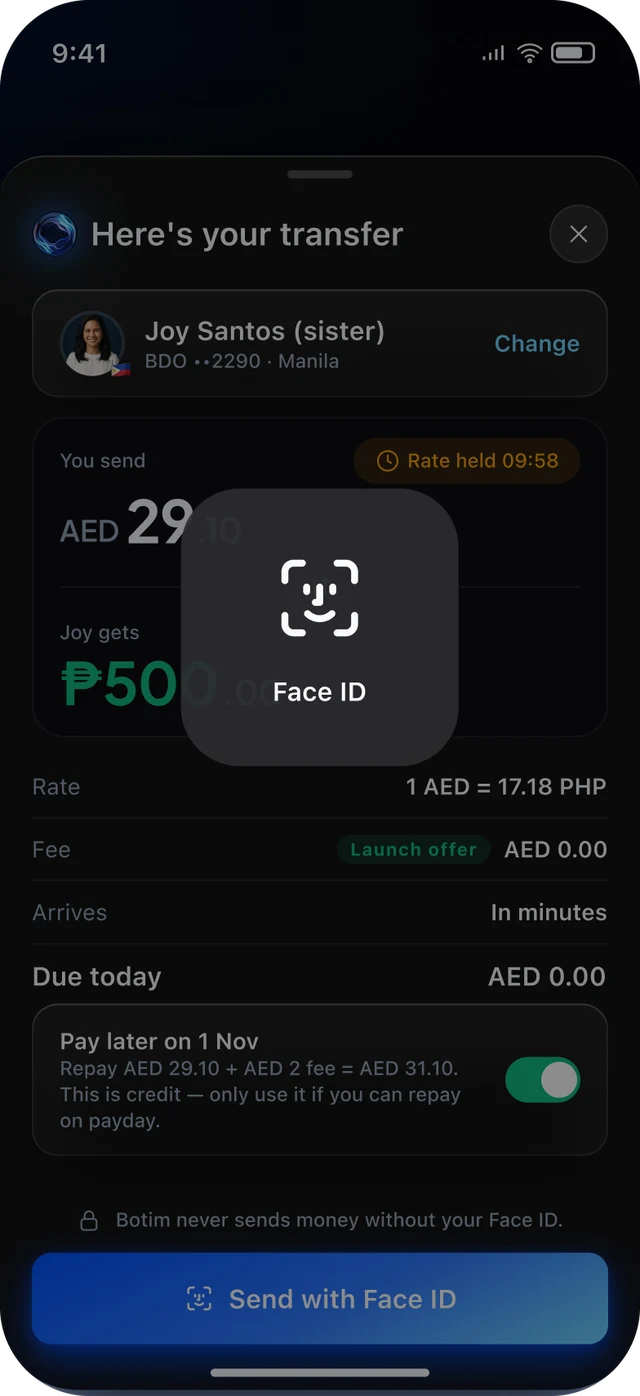
6 · Face ID
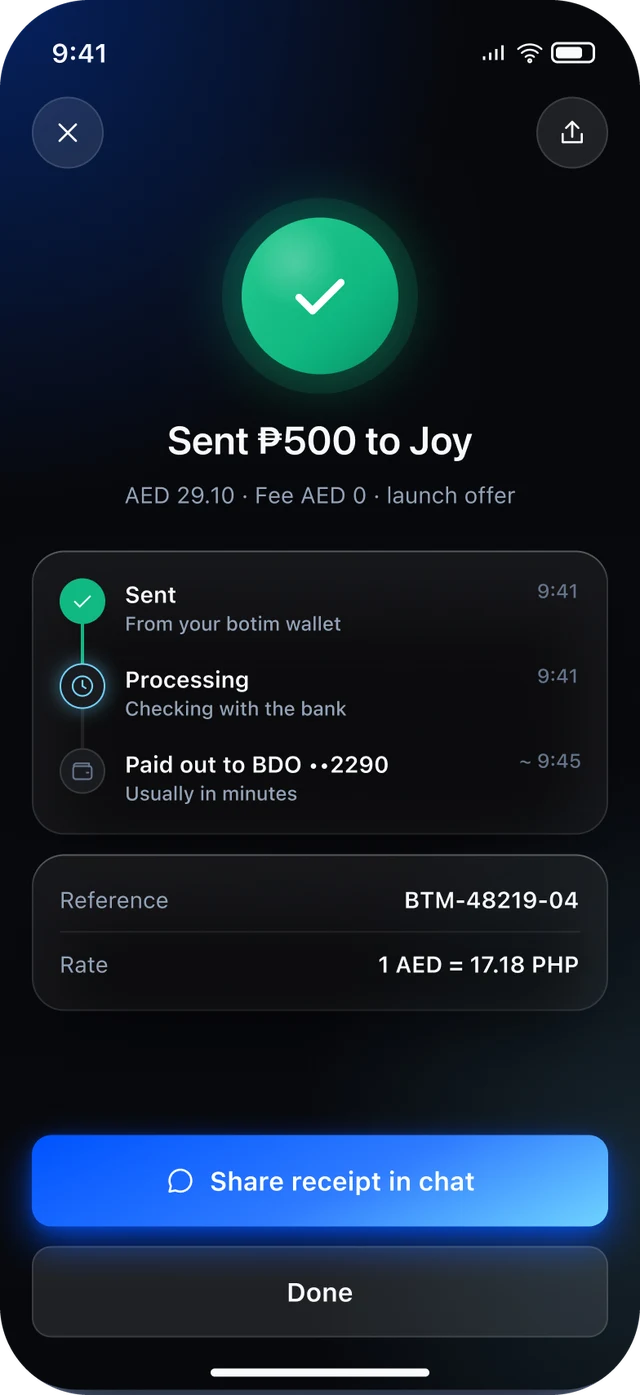
7 · Sent
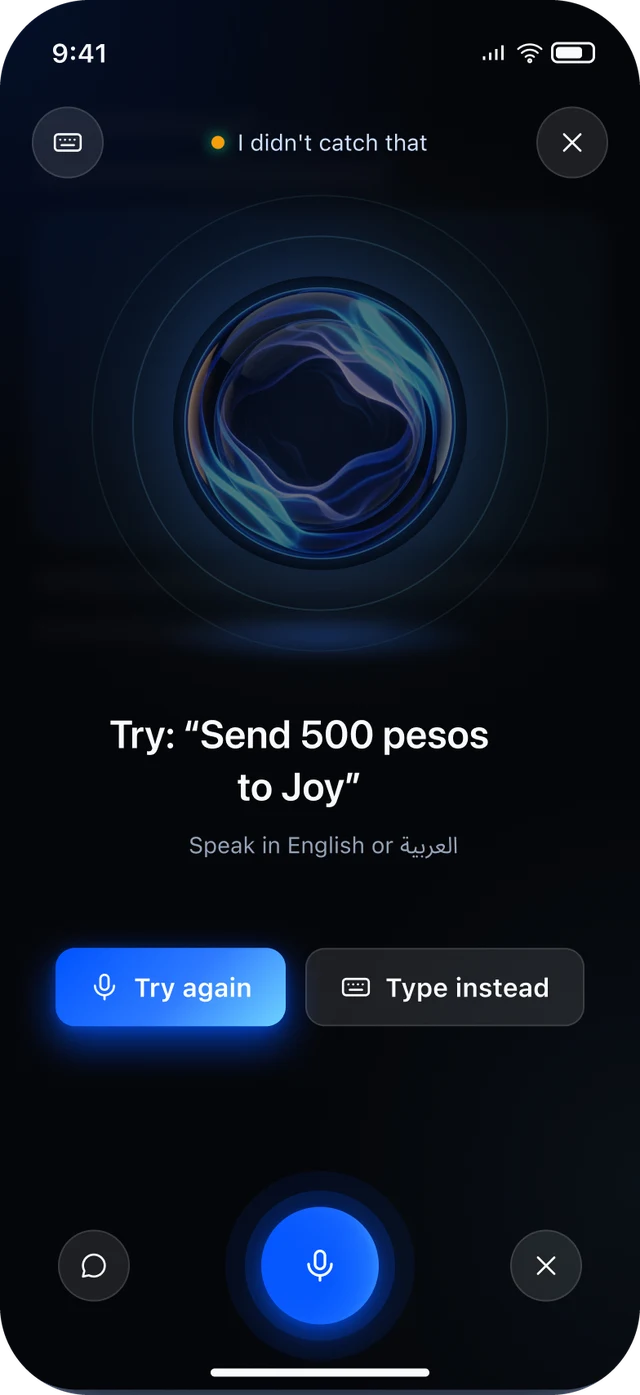
Branch · voice not understood
Pay later is offered, never pushed.
When the wallet runs low, Pay later appears as an option. Before she confirms, the card spells out the full cost: repay AED 29.10 + AED 2 fee = AED 31.10 on 1 Nov.
- Never pre-selected
- Total and date shown before confirm
- Plain warning: this is credit, only use it if you can repay on payday
The AED 2 Pay later fee is an assumption for the concept.
Built for both directions.
Every component has a right-to-left variant: order mirrors, Cairo replaces SF Pro, and amounts keep Western digits and stay left-to-right inside Arabic sentences.
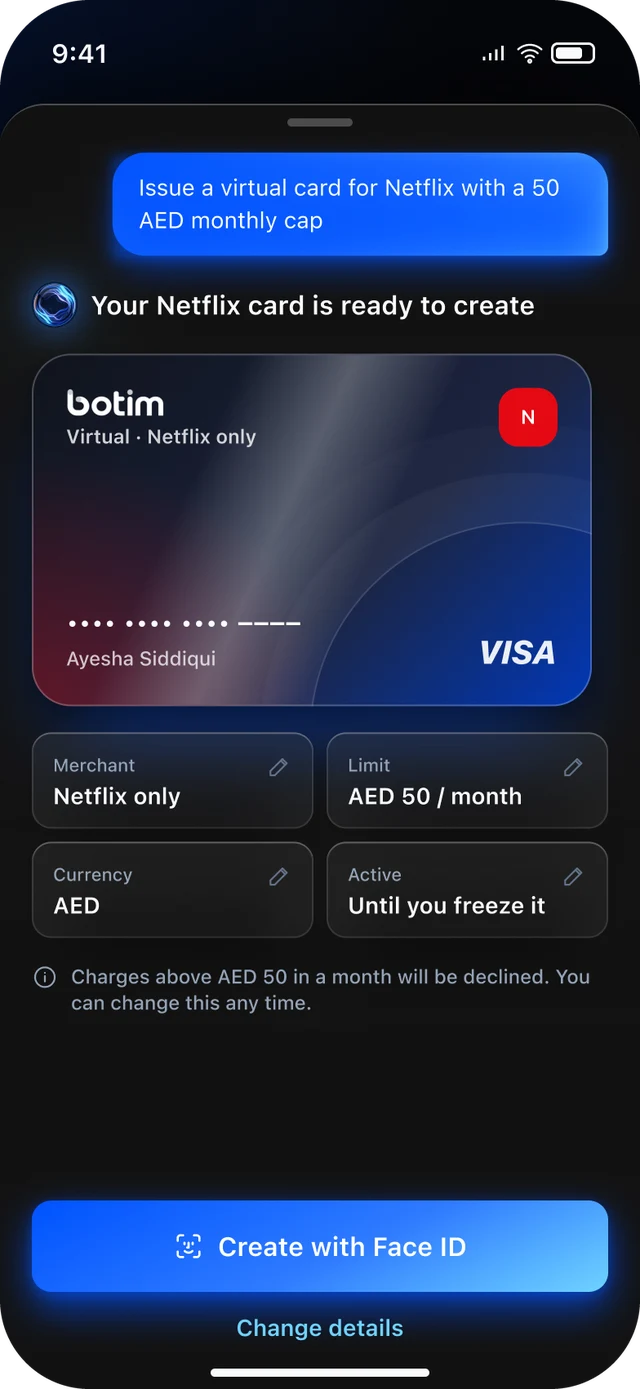
S06-EN · Card preview
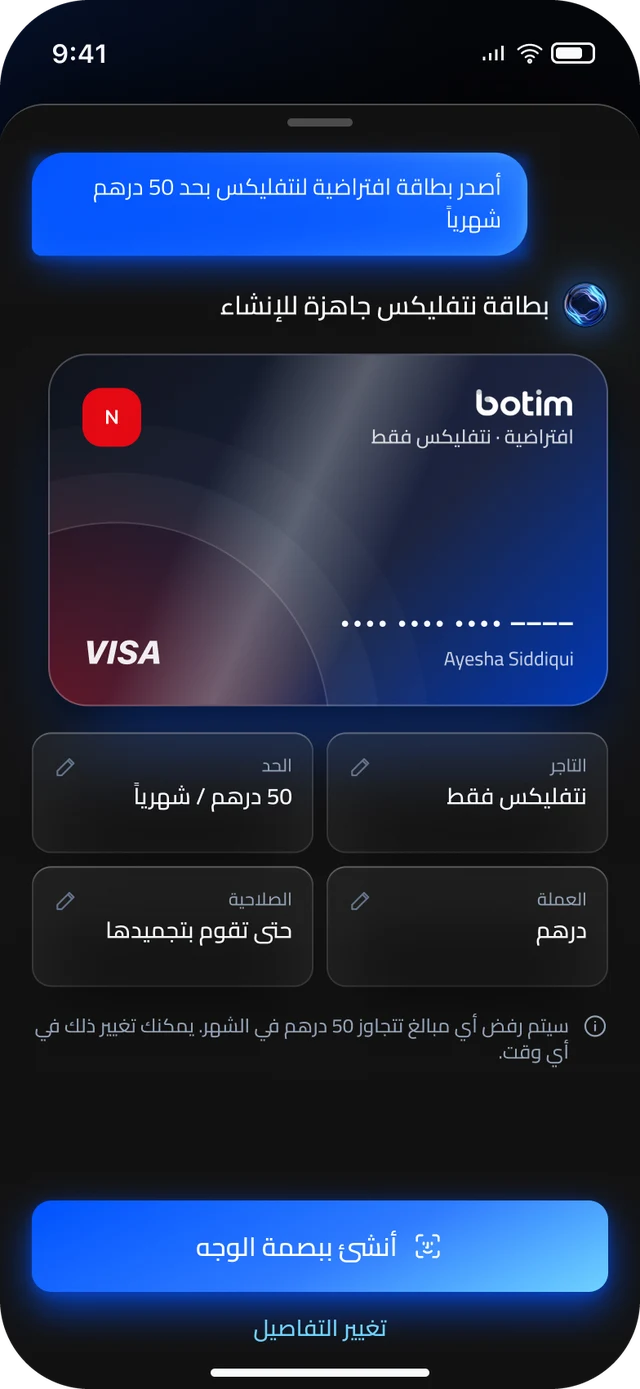
S06-AR · معاينة البطاقة
The best money UI is the one you barely see.
What the concept taught me, and what I would put in front of real users first.
What worked
One clarifying question beat a long form.
What I’d test first
Whether users trust a generated card as much as a familiar form.
Next
Month-end insights, AI permissions, and a usability test with 5 remitters.
AI turns what you say into money that moves.